How Geographic Factors Shape Preferences for Integrated Reward Systems in Virtual Gaming Applications
Written by Amir Perry · Jun 18, 2026
How Geographic Factors Shape Preferences for Integrated Reward Systems in Virtual Gaming Applications
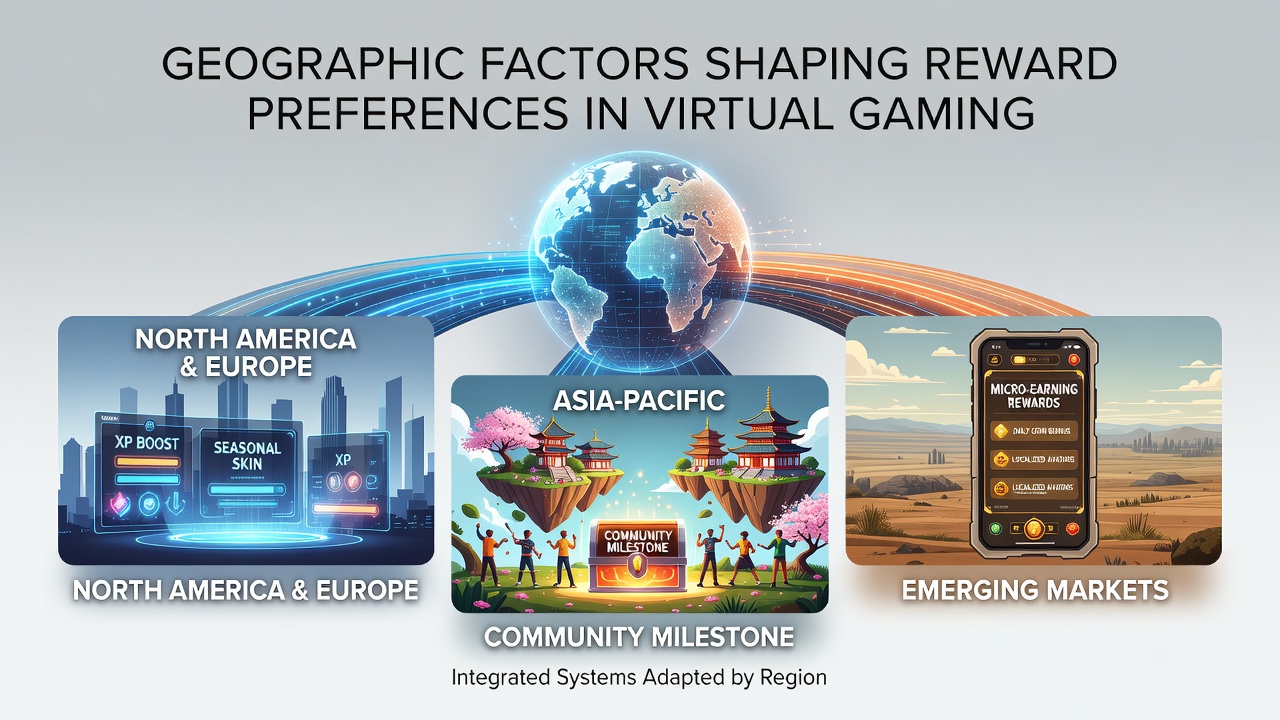
Geographic factors play a significant role in determining how users interact with integrated reward systems in virtual gaming applications, and data collected through 2026 continues to highlight distinct patterns tied to location. Researchers examining mobile and console-based platforms have noted that climate, population density, economic conditions, and cultural norms combine to influence whether players favor social collaboration features, competitive achievement tracking, or cross-application currency exchanges. Studies released in June 2026 from multiple academic institutions show these preferences vary sharply between densely populated urban centers in East Asia and sprawling suburban regions in North America, for instance, where daily play sessions and reward redemption habits diverge based on local infrastructure and lifestyle rhythms. Cultural dimensions emerge as one of the strongest geographic drivers, according to comparative analyses conducted across several countries. In collectivist societies prevalent throughout parts of Southeast Asia, integrated reward systems that emphasize group achievements and shared virtual goods see higher engagement rates, while users in more individualistic regions often gravitate toward personalized milestone rewards that highlight solo progress. Observers tracking application analytics note that these tendencies align with longstanding social structures rather than platform design alone, and they appear in both free-to-play titles and subscription-based environments. Population density further amplifies these effects, since high-rise living in cities like Tokyo or Seoul correlates with greater use of real-time cooperative reward pools that sync across multiple devices during short commutes or evening downtime. Economic variations tied to geography also shape reward preferences in measurable ways. Areas with higher average disposable income tend to support systems featuring premium virtual item exchanges and layered loyalty currencies, whereas regions experiencing greater income variability show stronger adoption of entry-level reward tiers that convert quickly into playable content. Figures from national statistical agencies reveal that broadband penetration and device affordability create additional layers, particularly in rural zones where intermittent connectivity favors offline reward accumulation followed by batch synchronization upon reconnection. These infrastructure realities produce distinct usage signatures that developers monitor through geolocated telemetry. Regulatory environments add another dimension because local policies on data sharing and digital transactions affect how integrated reward systems operate across borders. In the European Union, for example, frameworks governing cross-border data flows encourage reward pools that respect regional privacy standards, leading to segmented integration models that differ from those deployed in markets with lighter oversight. Singapore's digital economy statistics illustrate how targeted incentives around technology adoption have accelerated preferences for seamless multi-app reward transfers among users in that city-state. Similar patterns appear in other trade hubs where regulatory clarity supports sophisticated backend integrations. Technological infrastructure differences tied to geography produce further distinctions in reward system design uptake. Mountainous or island territories often contend with variable signal strength, which prompts developers to build reward mechanics that tolerate delayed synchronization, while flatland urban corridors with dense 5G coverage enable instantaneous leaderboard updates and collaborative events. Data released in June 2026 indicates that these infrastructure variables interact with seasonal weather patterns as well, since extreme temperatures or monsoon periods alter typical play windows and therefore the timing of reward redemptions. Applications that adapt reward pacing to these local cycles maintain steadier user retention across hemispheres.Regional Case Patterns in Reward Integration
Specific regional examples underscore how geography molds preferences without uniform global templates. In Nordic countries, where long winter nights coincide with high smartphone penetration, reward systems integrating with local social platforms show elevated participation in extended session bonuses. Conversely, equatorial markets demonstrate stronger interest in quick-turnaround daily rewards that fit fragmented play schedules around work and family obligations. Canadian research on digital engagement has documented parallel trends in northern versus southern provinces, where daylight duration and community event calendars influence when players activate integrated reward features. Urban versus rural divides within single countries further illustrate geographic influence. Metropolitan zones with abundant public transit often see reward systems optimized for micro-sessions during travel, whereas rural users prefer consolidated reward structures that reward longer but less frequent logins. These patterns hold across multiple application categories, from open-world exploration titles to competitive arena games, and they appear consistently in aggregated usage datasets compiled through 2026.Infrastructure and Connectivity Influences
 Connectivity quality remains a foundational geographic variable that determines viable reward system architectures. Regions investing heavily in fiber networks during the early 2020s now host applications with complex, real-time integrated economies, whereas areas still expanding basic mobile coverage rely on simplified reward loops that minimize data exchange. June 2026 reports from international technology monitoring groups confirm that these infrastructure gaps produce measurable differences in feature adoption rates, with developers responding by offering modular reward modules that scale according to local network conditions.