Tracing Loyalty Tier Thresholds and Their Role in Shaping Access Windows for Networked Prize Pools Across Reviewed Mobile Platforms
Written by Amir Perry · Aug 4, 2026
Tracing Loyalty Tier Thresholds and Their Role in Shaping Access Windows for Networked Prize Pools Across Reviewed Mobile Platforms
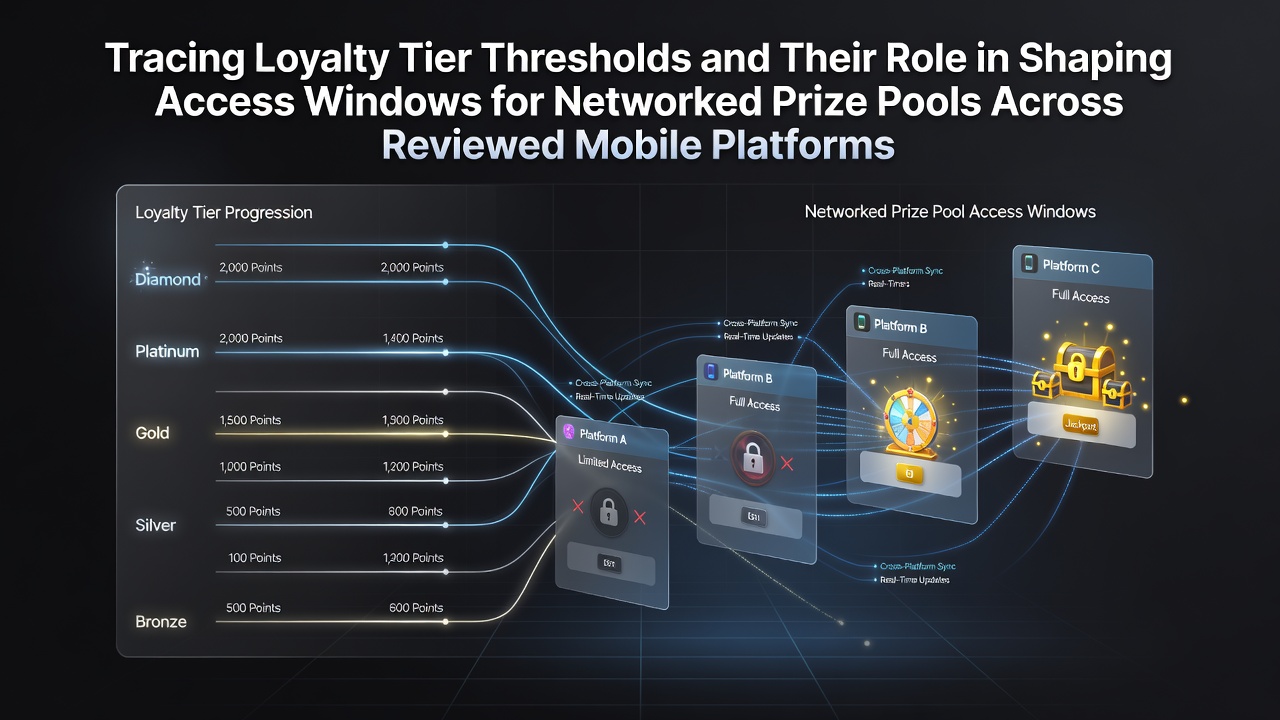
Analysts tracking mobile gaming ecosystems have documented how loyalty tier thresholds determine entry points into networked prize pools, with platforms establishing progressive requirements based on accumulated activity metrics such as play duration, deposit frequency, and engagement consistency. These thresholds create distinct access windows that open at specific intervals, often aligned with monthly or quarterly cycles, allowing higher-tier users earlier participation in pooled reward distributions across interconnected applications.
Defining Loyalty Tier Structures in Mobile Environments
Platforms categorize users into tiers through cumulative point systems where basic levels require minimal sustained interaction while elevated tiers demand repeated qualifying actions over defined periods. Data collected from reviewed applications indicates that entry into mid-tier status typically occurs after 30 to 60 days of consistent participation, whereas top tiers necessitate multi-month histories with elevated transaction volumes. This structure influences when participants gain visibility into prize pool mechanics, since lower tiers encounter delayed synchronization with networked data flows that feed real-time pool updates.
Observers note that thresholds often incorporate both quantitative benchmarks and qualitative factors such as account verification status or regional compliance checks, which can extend or shorten the effective window for pool access. In several documented cases from August 2026 platform audits, adjustments to these criteria reflected shifts in user retention patterns across North American and European markets.
Access Windows and Their Connection to Networked Prize Pools
Access windows represent scheduled periods during which tier-qualified users may claim shares from aggregated prize pools maintained through cross-platform linkages. These windows vary by tier, with premium participants receiving notifications and entry privileges days or weeks ahead of standard users, thereby concentrating initial distribution phases among smaller cohorts. Research compiled by industry monitoring groups shows that such staggered timing helps stabilize pool volatility by sequencing redemptions according to established loyalty metrics rather than uniform release schedules.
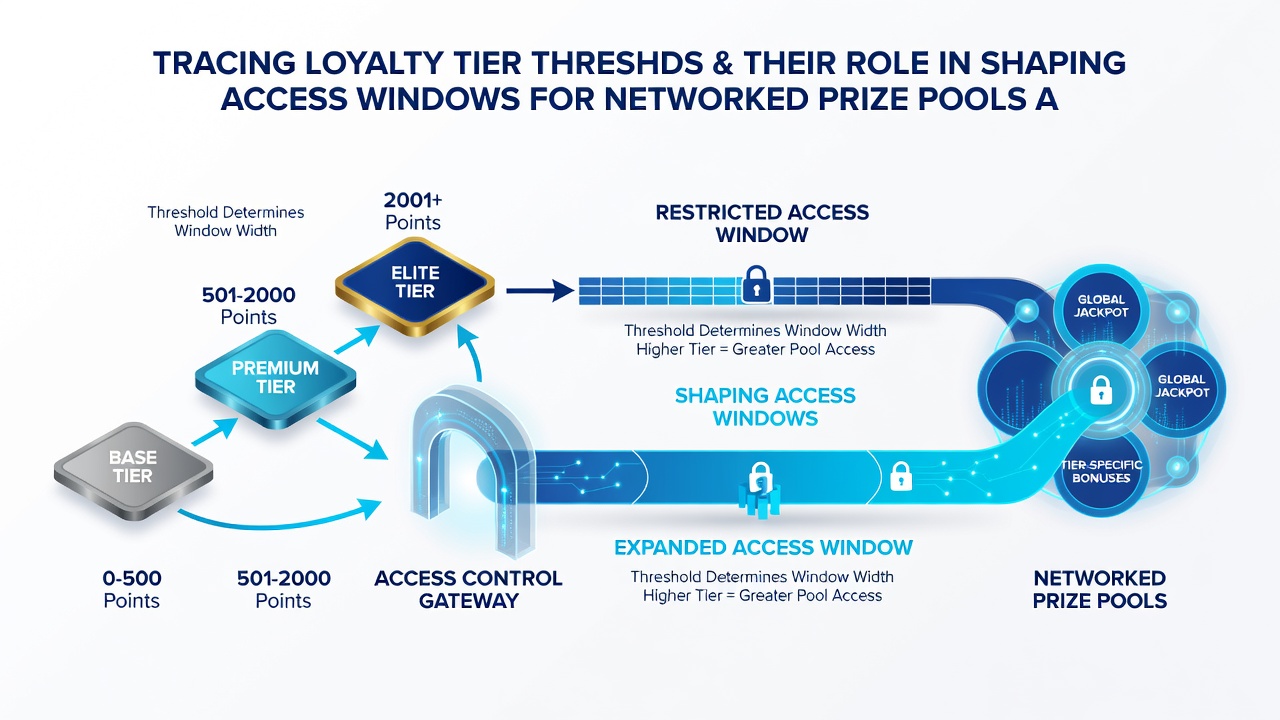
Network synchronization protocols ensure that once an access window activates, pool balances reflect contributions from multiple reviewed mobile platforms simultaneously. Experts tracking these systems have identified that threshold breaches trigger automated API calls between applications, updating eligibility flags within seconds of meeting the required activity levels. This process maintains consistency across devices while preventing premature entries from accounts still progressing through lower tiers.
Regional Variations in Threshold Implementation
Platforms operating under different jurisdictional frameworks apply loyalty thresholds with adjustments tied to local regulatory reporting standards. For instance, operators serving Canadian markets integrate data requirements aligned with provincial oversight bodies such as the Ontario Lottery and Gaming Corporation, which track tier progression alongside responsible gaming indicators. Meanwhile, applications reviewed in Australian contexts incorporate benchmarks influenced by state-level gaming authorities that emphasize transparent pool allocation timelines.
Comparative reviews completed in mid-2026 revealed that North American platforms tend toward shorter qualification windows for intermediate tiers compared with those in Asia-Pacific regions, where extended verification sequences extend the path to premium access. These differences shape how quickly users encounter networked prize opportunities, since regional compliance layers add sequential steps before full synchronization activates.
Data Patterns Across Reviewed Platforms
Figures released through aggregated platform analytics demonstrate correlations between tier advancement speed and frequency of prize pool participation. Accounts reaching higher thresholds within the first quarter show increased rates of window activation, with distributions occurring at predictable intervals tied to platform update cycles. Studies conducted by academic research teams have examined these patterns through anonymized datasets, confirming that threshold design directly modulates the timing and scale of individual entries into collective reward structures.
One analysis of cross-platform traffic from 2025 into August 2026 highlighted that mobile applications employing graduated access windows experienced steadier pool balance fluctuations than those using uniform eligibility rules. This outcome stems from the controlled release of claims across tier segments, which distributes demand loads more evenly throughout each cycle.
Conclusion
Threshold mechanisms continue to define participation sequences in networked prize pools by establishing clear progression markers that platforms enforce uniformly across reviewed mobile environments. Ongoing monitoring of these systems provides visibility into how tier structures interact with access timing, offering measurable insights into user movement through eligibility stages without reliance on subjective interpretation.